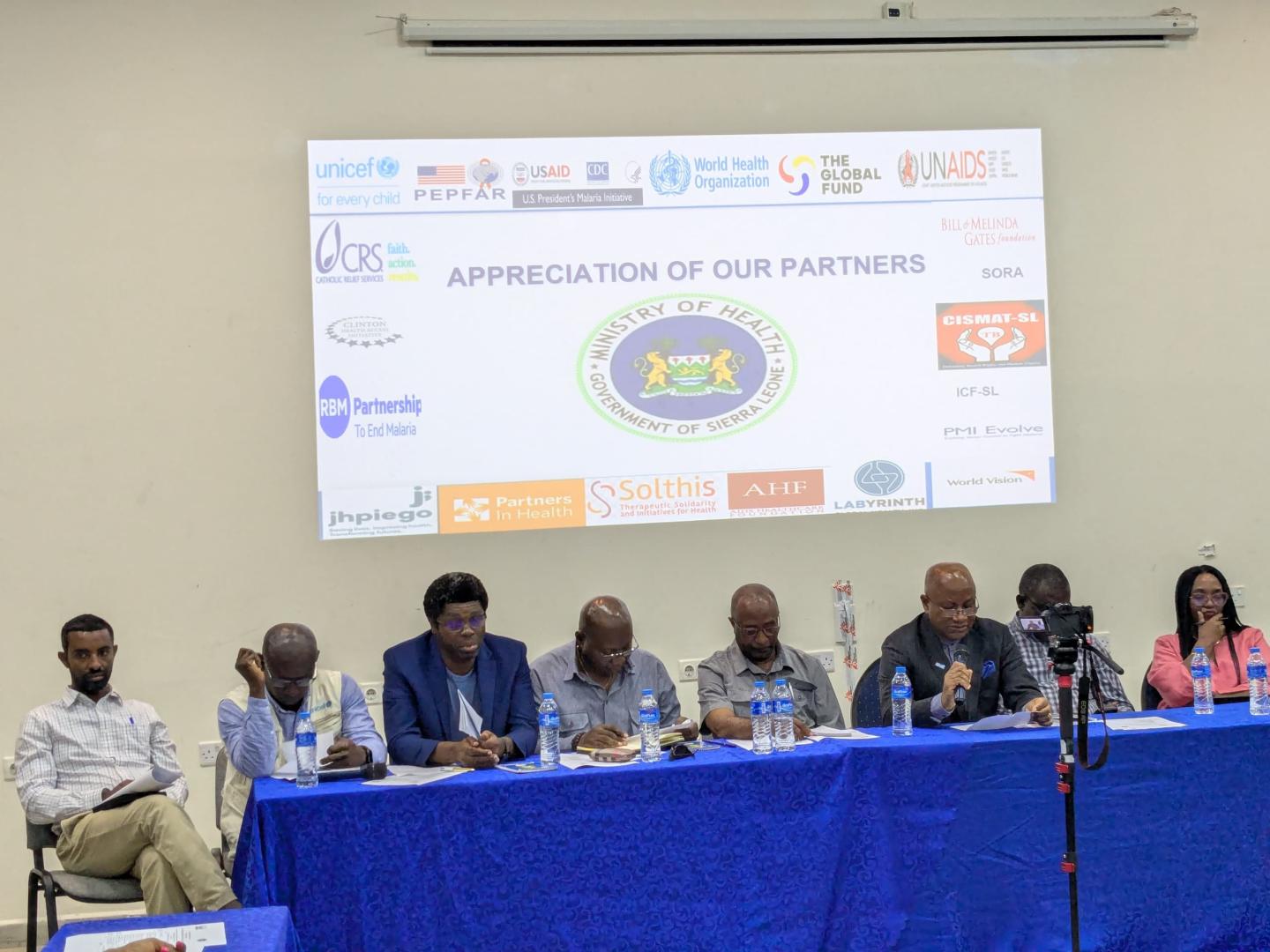
Sierra Leone launches the development of Strategic Plans for Malaria, HIV, and Tuberculosis
Freetown—The Ministry of Health, with support from the World Health Organization (WHO), CDC Foundation, the Clinton Health Access Initiative (CHAI), and key health partners, convened a joint dissemination meeting to share the findings of the end-term reviews of the National Strategic Plans (NSPs) for malaria, HIV, and tuberculosis, and to officially launch the development process for the 2026–2030 NSPs.
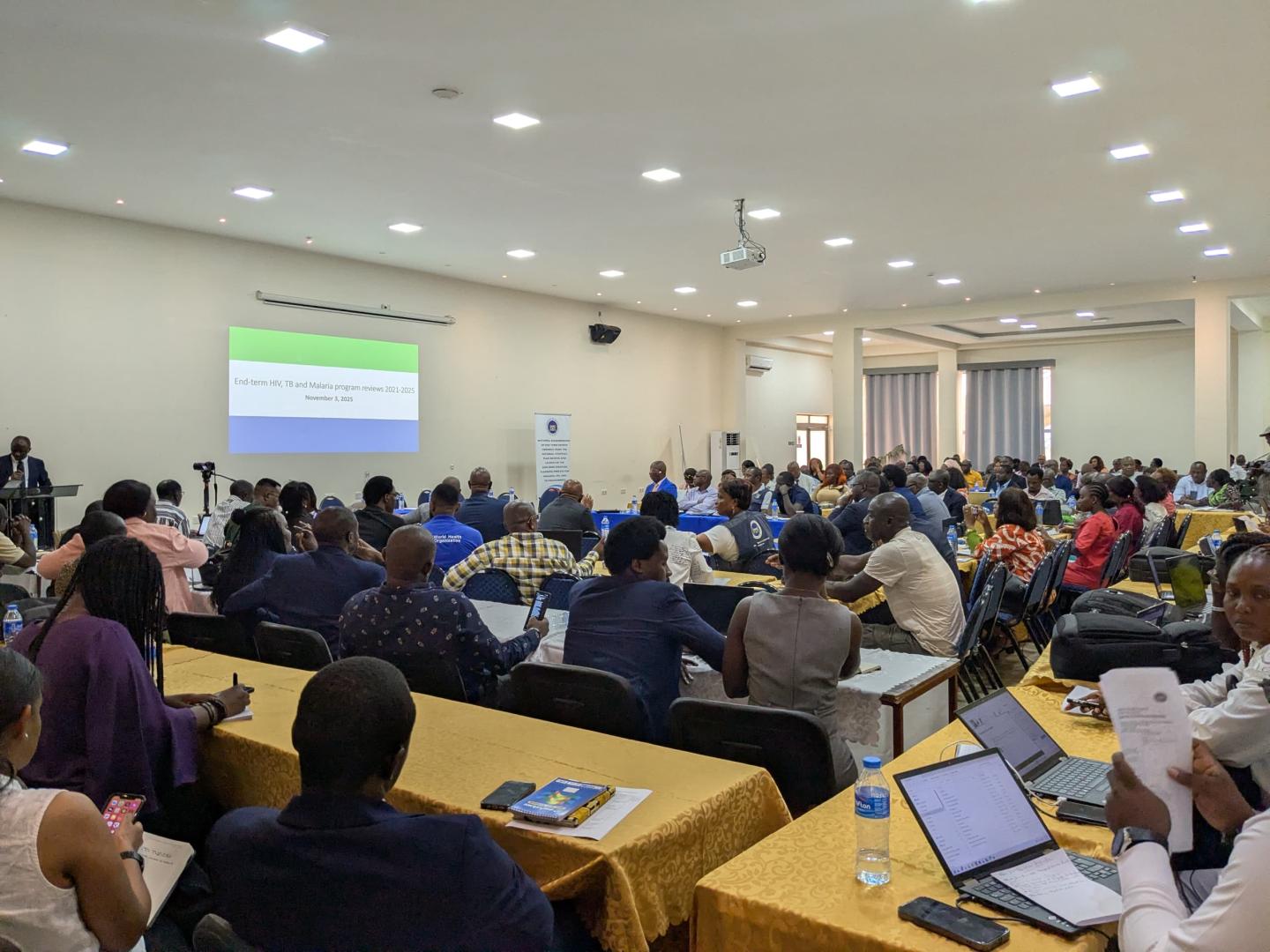
Held at the Brookfields Hotel in Freetown, the event brought together over 160 participants, including the Minister of Health, WHO Country Representative, UNAIDS and UNICEF Representatives, technical leads from the Ministry’s three disease programmes, and a wide range of development partners and technical experts.
The meeting provided an opportunity to reflect on progress made, identify gaps, and define strategic directions for the next phase of Sierra Leone’s response to the three diseases. It also marked the start of a new cycle of integrated strategic planning, ensuring that the forthcoming plans align with the broader National Health Sector Strategic Plan (NHSSP) 2026–2030.
In his keynote address, the Minister of Health, Dr. Austin Demby, emphasized the centrality of data in shaping the country’s health priorities and driving results. “We have the tools to control these diseases, yet lives are still being lost,” he said. “We must harness existing and new data to deliver excellent services to save lives across all life stages. The Ministry of Health and the National Public Health Agency have established a national data hub to improve our information systems. As donor resources continue to dwindle, we must demonstrate vision, accountability, and impact. As Sierra Leoneans, we have the capacity to do more - we can, and we must.”
The meeting featured the presentation of the planned roadmap for developing the next-generation strategic plans, including discussions on sustainable financing, data and laboratory systems, and integration across disease programmes. These discussions highlighted the need for alignment between national and partner priorities to address existing implementation challenges.
In his remarks, WHO Country Representative Dr. George Ameh acknowledged Sierra Leone’s steady progress under the 2021–2025 NSPs. “Sierra Leone has made commendable progress in all three diseases, including expanding malaria prevention and treatment services, strengthening HIV care and viral suppression, and improving TB diagnosis and treatment outcomes,” he said. “WHO remains committed to supporting the government to strengthen data systems, advance the quality of care, promote sustainable financing, and ensure that the next generation of strategic plans is firmly rooted in evidence, equity, and universal health coverage.”
Echoing the importance of integration, the UNAIDS Country Representative added that the joint development process marked a turning point in how the country approaches disease control. “The era of fragmented disease-specific planning is coming to an end,” the representative noted. “By developing the new strategies for HIV, TB, and malaria together, Sierra Leone is setting an example of coordinated, efficient, and country-led public health planning. UNAIDS is proud to support this process, which ensures that every investment strengthens the overall health system.”
Data from the end-term review reflected important progress across all three disease areas. TB case notifications rose from 17,000 in 2019 to 22,381 in 2024, with the treatment success rate for drug-susceptible TB increasing from 76 to 92 percent. The proportion of people living with HIV who know their status increased from 61 percent in 2020 to 89 percent in 2024, while treatment coverage rose from 48 to 86 percent, enabling over 81,000 individuals to access antiretroviral therapy. For malaria, the annual parasite incidence dropped from 239 to 213 cases per 1,000 population, and reported cases fell by 14 percent to 2,023,764 in 2024.
Despite these gains, challenges persist, including supply chain gaps, limited laboratory capacity, data quality issues, and heavy dependence on external funding. The next phase of planning aims to address these constraints through innovation and stronger coordination. Planned interventions include the digitalization of bed net distribution campaigns, operationalization of the national malaria data repository, community-based models for HIV treatment delivery, and deployment of mobile X-ray units with artificial intelligence for TB screening.
The development of the 2026–2030 NSPs will continue with a six-day National Strategic Plan Development Workshop involving technical teams from all three programmes. Facilitated by the Directorate of Disease Prevention and Control (DDPC), the process is designed to promote collaboration and harmonization across programmes, followed by validation and costing sessions.
This integrated approach reflects the Ministry of Health’s commitment to building a stronger, more resilient health system. By aligning strategic planning efforts and focusing on evidence-based interventions, Sierra Leone aims to sustain progress, close remaining gaps, and accelerate its journey toward ending malaria, HIV, and tuberculosis as public health threats.

WHO Sierra Leone
Email: sharkahm [at] who.int (sharkahm[at]who[dot]int)